Crawl Space Moisture in Wilmington: When It's a Plumbing Problem
A damp crawl space is common in coastal Wilmington. Figuring out whether the cause is a plumbing leak or just the climate is the real question worth answering.
By the Wilmington Express Plumbing team · Updated September 2026
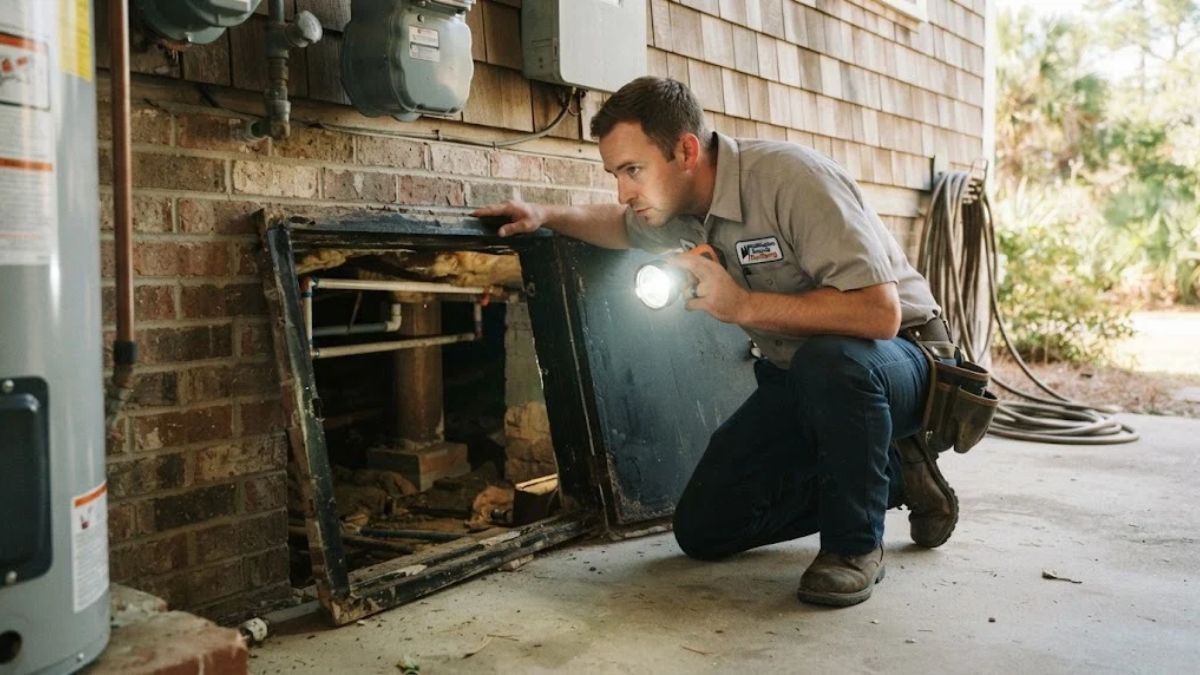
Homes with crawl space foundations are common throughout Wilmington, especially in older neighborhoods closer to downtown. A certain amount of humidity in a coastal crawl space is normal given the area's climate. The harder question is knowing when what you're seeing down there is ordinary coastal moisture versus an actual plumbing leak.
Why Wilmington crawl spaces run damp to begin with
The area's humid subtropical climate means outdoor air itself carries significant moisture much of the year. That moisture finds its way into a poorly sealed or unvented crawl space regardless of whether any plumbing is involved. This baseline dampness is exactly why distinguishing climate-driven moisture from an actual leak matters, since treating a climate issue as a plumbing problem, or the reverse, wastes real time and money.
Signs that point toward a plumbing leak specifically
- Standing water or a visibly wet spot concentrated near a specific pipe run rather than spread evenly.
- A musty smell that's worse in one particular area of the crawl space.
- Visible corrosion or mineral buildup on a specific pipe section.
- A water bill increase that coincides with when the moisture was first noticed.
- Water that appears even during a dry stretch with no recent rain.
Signs that point toward general climate moisture instead
Moisture that's fairly even throughout the crawl space, worsens specifically during humid summer months, and isn't concentrated near any particular pipe or fixture usually points toward general climate and ventilation issues rather than a leak. That's still worth addressing, since prolonged moisture invites wood rot and mold, but it's a different fix than a plumbing repair.
How we actually tell the difference
We start the same way as any suspected leak: checking the water meter with every fixture off to confirm whether water is actually flowing somewhere it shouldn't. If the meter is moving, we're dealing with a real leak, and acoustic and visual inspection in the crawl space narrows down the exact location.
If the meter shows no movement, the moisture is very likely a ventilation or climate issue rather than a plumbing one, and we'll tell you that honestly rather than recommend plumbing work that won't solve the actual problem.
Why this matters for water heater placement specifically
A water heater located in a crawl space faces a real, practical risk in a flood-prone or consistently damp environment. Our Water Heater Installation & Replacement page covers the option of elevating a crawl-space unit above the expected flood line, a decision that's easiest to make at replacement time rather than after a problem forces the issue.
What we'd recommend either way
Whether the cause turns out to be a leak or general climate moisture, a genuinely damp crawl space is worth addressing rather than ignoring. Left alone, either cause can eventually affect flooring, framing, or indoor air quality in the rooms above.
Ventilation matters even when there's no leak at all
A crawl space needs a way for moisture to escape rather than accumulate, which is why blocked or damaged vents are worth checking even when a leak has been ruled out entirely. Debris, landscaping mulch, or even pest nests can block vents over time without anyone noticing until moisture becomes a visible problem.
This is a genuinely simple thing to check seasonally, and it's a real, practical step that reduces the odds of ever needing a bigger repair later, whether that eventual problem turns out to be plumbing-related or purely structural.
What happens if moisture goes unaddressed too long
Persistent crawl space moisture, from any source, eventually affects the wood framing above it. Sustained dampness softens structural wood over time and creates conditions that encourage mold growth, both of which are far more expensive to address once they've progressed than the original moisture source would have been.
This is part of why we recommend investigating a damp crawl space promptly rather than waiting to see if it resolves on its own. It rarely does, and the cost of waiting tends to compound rather than stay flat.
Encapsulation and vapor barriers: a separate but related topic
Some homeowners address chronic crawl space humidity with a vapor barrier or full encapsulation system, a construction and moisture-control project rather than a plumbing one. If a plumbing leak turns out not to be the cause of your crawl space moisture, this is often the next place to look, and it's worth discussing with a contractor who specializes in that specific work.
We'll tell you plainly if we've ruled out a plumbing cause so you're not left wondering whether to keep chasing a leak that isn't actually there.
A practical seasonal habit worth building
Checking your crawl space access point once each season, especially heading into and out of the humid summer months, is a small habit that catches problems early. You don't need to be a plumber to notice a new wet spot, an unusual smell, or standing water that wasn't there before. Noticing it early is what makes the eventual fix, whichever kind it turns out to be, smaller and less expensive.
If you're not comfortable entering the crawl space yourself, a quick visual check from the access hatch with a flashlight still catches most obvious warning signs, and it takes less time than most other seasonal home maintenance tasks.
Crawl space moisture questions
Yes, given the area's humid climate. The question is whether it's excessive or concentrated in a way that points to an actual plumbing leak.
Check your water meter with every fixture in the house off. If the dial is still moving, water is flowing somewhere, which is worth having professionally located.
Yes. Prolonged moisture from any source can encourage wood rot and mold in the structure above, so it's worth addressing regardless of the cause.
It's worth discussing at replacement time, especially if the space has flooded before. Elevating the unit is a practical option in many cases.
Not sure if your crawl space moisture is a leak?
Call (919) 944-7281, 24/7.