What a 1931 NC Plumbing License Number Actually Means Today
North Carolina's plumbing licensing board issued its very first license to a contractor working right here in Wilmington. Here's why that history still matters when you're hiring someone today.
By the Wilmington Express Plumbing team · Updated September 2026
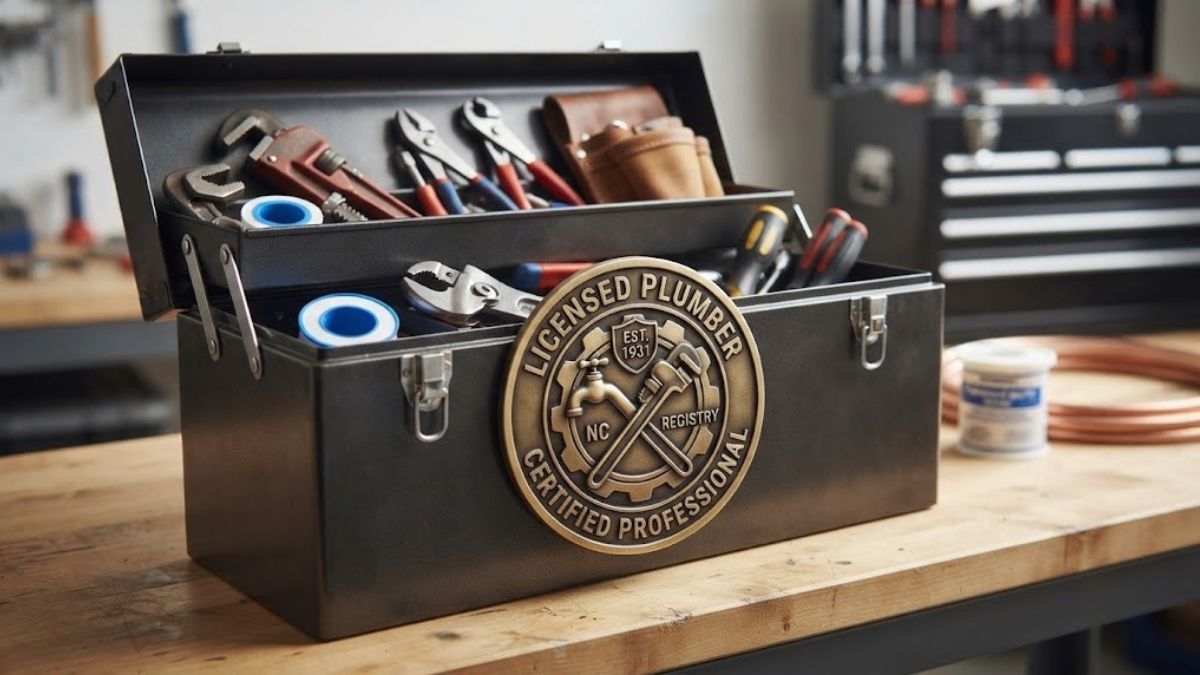
In 1931, the North Carolina General Assembly created the State Board of Examiners of Plumbing, Heating and Fire Sprinkler Contractors. Its first license, number 001 P-I & H-1-I, was issued on June 4, 1931, to a contractor named W.R. Dosher, Jr., working out of Wilmington.
That's not a piece of trivia we're including for color. It's a real, verifiable fact from the North Carolina Department of Administration's own records. It also points to something practical: plumbing licensing in this state has centered on getting the trade's basics right since before most of Wilmington's current housing stock was even built.
Why licensing exists in the first place
Before 1931, there was no statewide framework confirming a plumbing contractor actually knew what they were doing. The Board's creation was a direct response to that gap, establishing a licensing exam and ongoing oversight for plumbing and heating contractors across the state.
The original license only applied in cities and towns with a population greater than 10,000. Wilmington, already a significant port city at the time, was exactly the kind of place the new licensing law was built to cover from day one.
What a real license actually verifies
A current North Carolina plumbing license means a contractor has passed a state exam covering code knowledge, safe installation practices, and the technical standards the trade is built on. It's not a marketing badge. It's confirmation that someone has demonstrated a baseline of competence the state itself defined and continues to enforce.
This matters most on the jobs where getting it wrong has real consequences: gas line work, backflow prevention, and anything touching a home's main water or sewer connection. An unlicensed installation in any of these areas isn't just a code violation on paper. It's a real safety and liability question.
How to actually verify a license, not just take someone's word for it
The North Carolina State Board of Examiners of Plumbing, Heating and Fire Sprinkler Contractors maintains a public license lookup. Any contractor claiming to be licensed should be able to tell you their license number, and you can independently confirm it rather than relying on a truck decal or a business card.
This is a reasonable thing to ask before any significant plumbing work, not an awkward question. A contractor with nothing to hide will have no issue providing it.
Why we bring this up at all
We don't display a license number on our own site without one that's real and verifiable, which is a rule we hold ourselves to regardless of how it might look to skip it. If you ask, we'll tell you honestly where things stand, and we'd encourage you to ask the same question of anyone else quoting a job in your home.
For gas-related work specifically, our Gas Line Installation & Repair page covers what licensed, code-compliant work actually looks like, including the pressure testing that confirms an installation is safe before anyone uses it.
A century of the same basic standard
Ninety-plus years after that first license was issued in Wilmington, the underlying idea hasn't changed. Plumbing work that touches a home's water, gas, or sewer systems should be done by someone who's demonstrated they know how to do it safely. That's a low bar in one sense and a genuinely important one in another, and it's worth remembering the next time you're comparing quotes for a job that matters.
What's changed since 1931, and what hasn't
The specific code requirements a licensed plumber follows today look nothing like they did in 1931. Materials, safety standards, and building codes have all evolved substantially. What hasn't changed is the basic premise: a licensing exam exists to confirm someone actually knows the trade before they're allowed to work on systems that affect a home's safety.
The Board itself has grown alongside that responsibility, now overseeing plumbing, heating, and fire sprinkler contractors together rather than the narrower plumbing and heating scope it started with in 1931. That expansion reflects how much more complex residential and commercial systems have become over the past century.
Why this history is worth knowing as a homeowner, not just trivia
It's easy to treat licensing as a background detail that doesn't affect your actual decision when hiring someone. In practice, it's one of the few objective, independently verifiable facts you can check before letting someone work on your home's plumbing, gas lines, or water supply.
A quote, a truck wrap, and a confident sales pitch tell you very little about whether someone actually passed the state's exam. A license number you can look up yourself tells you something real.
The practical takeaway
Next time you're getting quotes for plumbing work in Wilmington, ask for a license number and take thirty seconds to verify it. It's a small step that connects directly back to a standard this state has enforced, in one form or another, since a Wilmington contractor became the very first person in North Carolina to hold one.
It's also worth asking the same question for adjacent trades doing related work in your home, electricians and HVAC contractors included, since North Carolina licenses each of those trades separately under its own board. A licensed plumber isn't automatically licensed to do electrical work, and vice versa, so verifying each contractor for the specific work they're actually performing is the more thorough approach.
Licensing questions from Wilmington homeowners
Requirements vary by the type and scope of work. When in doubt, ask directly whether the specific job requires a licensed contractor under current North Carolina law.
The North Carolina State Board of Examiners of Plumbing, Heating and Fire Sprinkler Contractors maintains a public lookup. Ask for the license number and check it independently.
It confirms a baseline of tested competence and legal standing, not a guarantee of every individual job's quality. It's a reasonable first filter, not the only one.
The 1931 law initially applied only to cities over 10,000 people, and Wilmington was a significant population center in North Carolina at the time.
Want to verify your plumber's licensing before a job?
Call (919) 944-7281, 24/7.