Tree Roots and Sewer Lines: Why Wilmington's Oak Canopy Is a Real Risk
The mature hardwood trees that make Wilmington's neighborhoods so distinctive are also a documented, recurring cause of sewer line clogs and damage.
By the Wilmington Express Plumbing team · Updated September 2026
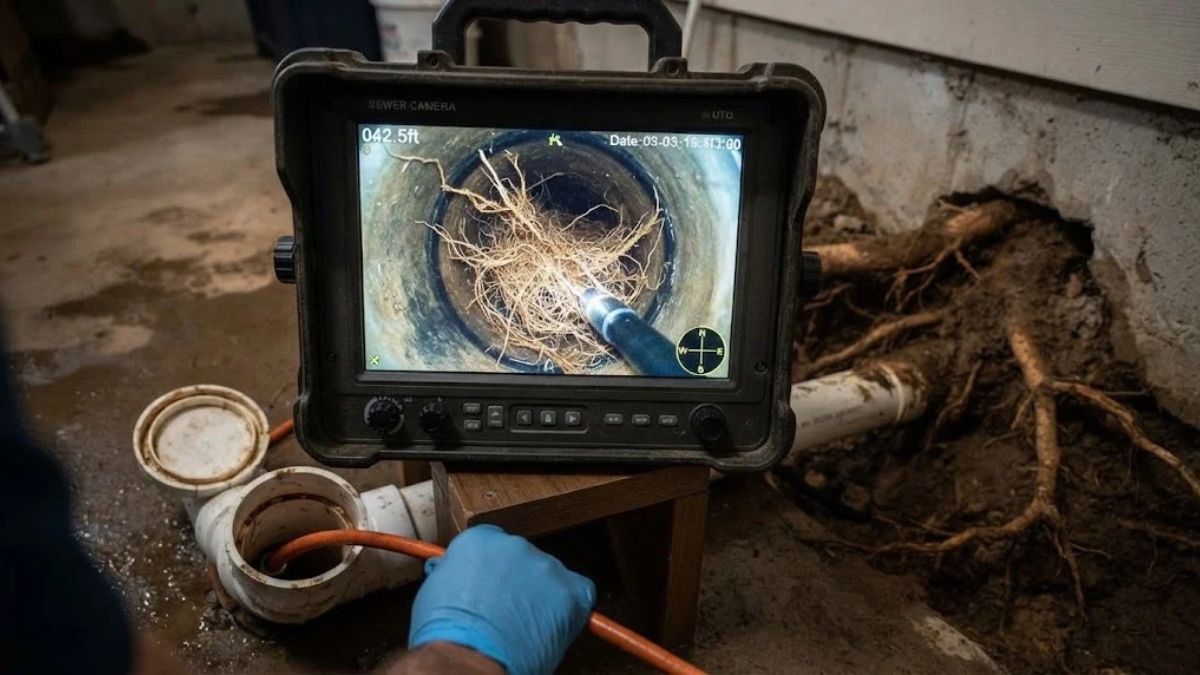
If the same drain in your home clogs on almost the same schedule every year, the actual cause might be growing in your yard. Wilmington's mature hardwood canopy, live oaks especially, is a genuine, well-documented source of sewer line problems, not a rare exception.
This isn't unique to us saying so. Other plumbing companies serving this market independently report the same pattern, and it comes down to simple biology: roots seek out moisture, and a sewer line is a reliable, constant source of it.
How a root actually gets into a sewer line
Roots don't grow through solid pipe. They find their way in through joints, small gaps, or existing cracks where moisture is already escaping. Once a root tip finds that moisture, it grows toward it and, over time, widens the opening it entered through.
This is why older sewer laterals are more vulnerable than newer ones. Cast iron and clay pipe, common in homes built before modern materials were standard, naturally develop small joint gaps over decades of normal settling. That gives roots an entry point that a modern, smooth PVC line is much less likely to offer.
The pattern that gives it away
A single, isolated clog is usually just a clog. A clog in the same drain, on roughly the same seasonal schedule, year after year, is a different signal entirely. That repeating pattern almost always means something structural, most often root intrusion, is feeding the problem rather than a coincidental new blockage each time.
Why clearing the clog doesn't fix the underlying cause
A standard drain snake breaks a path through whatever's blocking the line, which restores flow immediately but leaves the root mass largely in place. That's why a snaked line with an active root problem tends to clog again within weeks, not months.
Our Hydro Jetting page covers the method that actually addresses this: high-pressure water that scours the full interior of the pipe, clearing root growth from the entire circumference rather than punching a single path through it.
When it's more than jetting can fix
If root intrusion has been happening long enough, it can crack or displace the pipe itself, not just clog it. A camera inspection is how we tell the difference. A line that's simply coated in root growth responds well to jetting, while a line with actual structural damage needs the repair covered on our Sewer Line Repair page instead.
In the more severe cases, where damage runs along most of the line rather than one section, Sewer Line Replacement becomes the more honest recommendation, and we'll walk you through exactly what the camera found before recommending it.
Can you prevent root intrusion without removing your trees?
Removing a mature oak isn't a reasonable answer, and it's not usually necessary. Preventive jetting on a known-vulnerable line, done every year or two before a clog forces the issue, keeps the pipe interior clear before roots have a chance to establish a real foothold.
For a home with a documented history of this specific problem, that kind of scheduled maintenance is usually far cheaper over time than reactive emergency calls every time the same drain backs up.
What this means for different parts of Wilmington
Neighborhoods closer to downtown, with older homes and mature tree canopy that's had decades longer to grow, see this pattern more often than newer subdivisions with younger trees and modern PVC sewer lines. If you're in an older home near the historic core, it's worth asking about your sewer line's material and age even if you haven't had a clog yet.
How this connects to the rest of your drain system
Root intrusion specifically affects the sewer lateral, the line carrying wastewater away from your home toward the municipal connection. It's a different system from the interior drain lines covered on our Drain Cleaning & Unclogging page, though the two are easy to confuse when you're just trying to figure out why a drain won't flow.
A single slow kitchen sink is usually an interior issue: grease, food debris, or a localized clog close to that one fixture. A slow drain that affects multiple fixtures at once, especially the lowest one in the house, points further downstream toward the main line, which is exactly where root intrusion tends to occur.
What we actually look for during an inspection
A sewer camera doesn't just confirm that roots are present. It shows where along the line they've entered, how much of the pipe's interior diameter they've restricted, and whether the surrounding pipe material shows any additional damage beyond the root growth itself.
That level of detail is what lets us recommend the right fix rather than a default one. A minor root intrusion at a single joint might only need targeted jetting. Root growth spread across multiple joints along a longer stretch of pipe is a different conversation entirely.
The cost of waiting versus addressing it early
A known root problem doesn't improve on its own. Left alone, root mass inside a pipe tends to grow denser and more extensive over successive seasons, which is part of why the same drain often clogs faster each time it happens. Addressing it with jetting or a proper repair earlier, rather than treating each recurrence as a fresh, unrelated problem, is almost always the more cost-effective path over the life of the pipe.
This is one of the more common patterns we see across Wilmington's older neighborhoods specifically, and it's the reason we ask about a drain's history, not just its current symptom, before recommending a fix.
Root intrusion questions from Wilmington homeowners
A camera inspection is the reliable way to confirm it. The pattern of a clog returning on roughly the same schedule is a strong hint, but the camera shows exactly what's happening inside the line.
It can help going forward, but it doesn't undo existing root growth already inside the line, and removing a mature, healthy tree is rarely the first recommendation.
Often every one to two years as preventive maintenance, though the right interval depends on how quickly roots have re-established in your specific line historically.
Typically not, since it's considered a gradual, ongoing issue rather than sudden accidental damage. Check your specific policy for details.
Same drain clogging on a predictable schedule?
Call (919) 944-7281, 24/7.