Whole-Home Repiping in Wilmington, NC
When the same house keeps producing new leaks in different spots, the pipe material itself is usually the real problem. Repiping replaces it before the next leak finds you first.
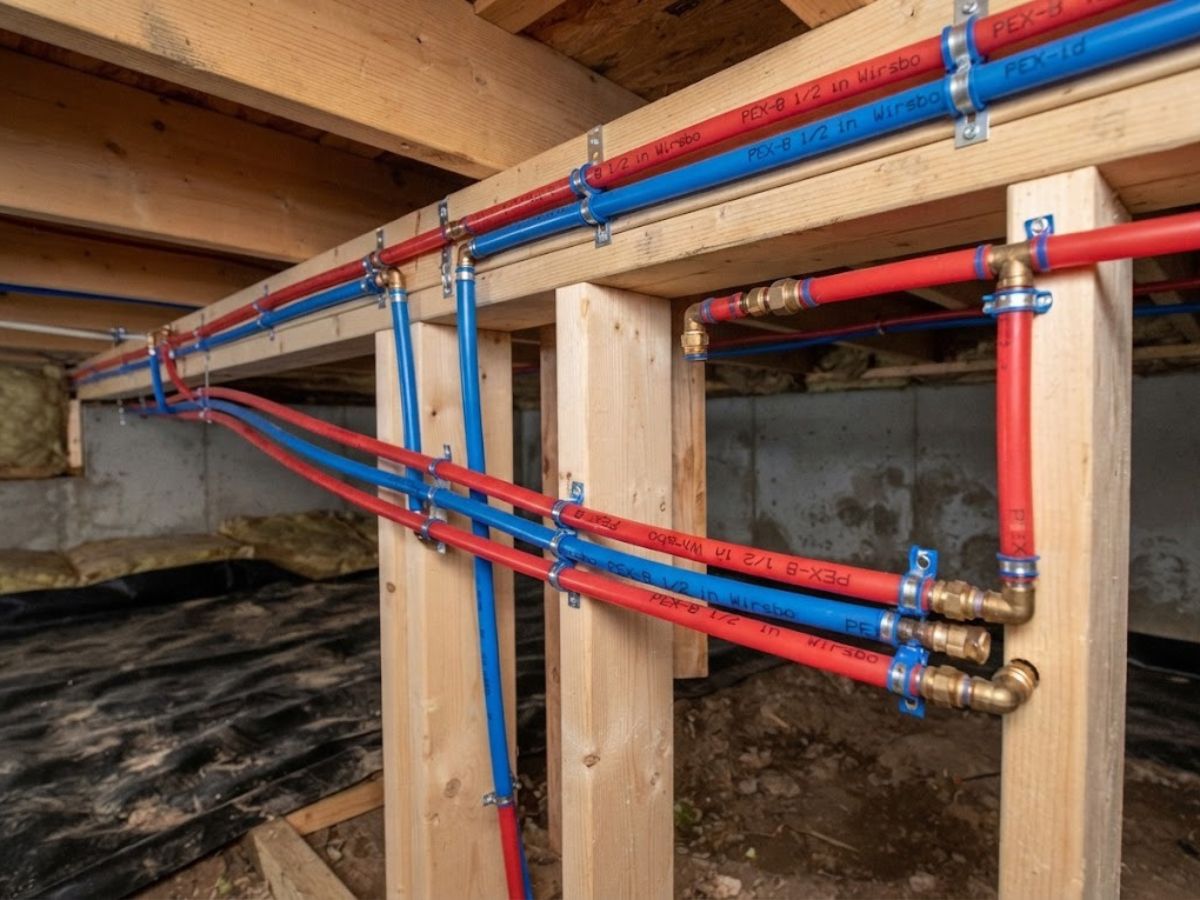
Repiping means replacing a home's supply piping, the lines carrying water to fixtures, rather than patching one failed section. It's a bigger job than a single leak detection and spot repair, and it's the right call once a home's piping is failing in more than one place.
This is different from repairing the buried water service line running from the street or meter to the house, and it's also different from a sewer or drain line problem covered on our drain cleaning and sewer line repair pages. Repiping is about the plumbing inside the walls and under the floors, not the lines carrying water or waste to and from the property.
Why older Wilmington homes are candidates for repiping
Homes built before the 1990s in the downtown Wilmington area often still run on galvanized steel or early copper supply lines. The area's humid, salt-laden coastal air accelerates corrosion on both, from the inside out. A galvanized line corrodes internally over decades until its interior diameter narrows, which shows up as gradually falling water pressure long before an actual leak appears.
PEX has become the more common replacement material here specifically because it resists the corrosion pattern that eventually pinholes aging copper and galvanized lines in this climate. It's also more forgiving of the soil movement described on our leak detection page, since it flexes slightly rather than cracking at a rigid joint.
Signs a home needs repiping, not another spot repair
- More than one pipe leak in the past year or two, in different parts of the house.
- Water pressure that has gradually dropped over several years.
- Discolored water, especially a rust tint, from multiple fixtures.
- Visible green or white corrosion buildup at exposed pipe joints.
- A home built before the 1990s that has never had its supply lines replaced.
If you're asking about "why do I keep getting leaks"
Most homeowners don't come to us asking for repiping by name. They call because they've had two or three unrelated-seeming leaks in the past year and are starting to wonder if it's really unrelated. It usually isn't.
When the underlying pipe material itself is failing, spot repairs buy time between leaks, not an end to them. Repiping is the fix that actually stops the pattern rather than treating each leak as its own isolated event.
How a repipe actually happens
We map the full existing supply system first, noting which sections are galvanized, copper, or already PEX from a prior partial repair. That way the plan accounts for the home's real plumbing history, not a clean-slate assumption.
Work typically happens in sections to keep water available to at least part of the house during the project, with access points opened in a small number of targeted spots rather than removing every wall in the home.
Once new lines are run, every fixture is pressure-tested before we close up any access point, so a hidden connection issue gets caught before drywall goes back up, not after.
Want us to take a look? Call (919) 944-7281 and we'll walk through what you're seeing.
Material options for a Wilmington repipe
| Material | Best for | Trade-off. |
|---|---|---|
| PEX | Most whole-home repipes in this climate | Not rated for exterior UV exposure, needs protection where lines run outside. |
| Copper | Homeowners wanting to match existing copper runs | Higher material cost, still subject to the same salt-air corrosion pattern over time. |
| Partial repipe | Only one section is failing, rest tests sound | Lower cost, but doesn't address other aging sections that may fail later. |
What affects the price
- Full whole-home repipe versus a partial repipe of one section.
- Material chosen: PEX versus copper.
- Number of fixtures and stories the new lines need to reach.
- Drywall, flooring, or landscaping that needs to be opened and restored.
Non-emergency estimates are free. For emergency work, we give you the real number before we start. Want yours? Call (919) 944-7281.
When we won't recommend a full repipe
If a home has had exactly one leak and the rest of the system tests sound, we won't push a whole-home repipe you don't need yet. A single isolated failure is usually a spot repair, not a sign the whole system is going.
We'll show you what the inspection actually found, not just tell you a number, so the repiping recommendation is based on real evidence in your specific home.
Questions before you decide? Call (919) 944-7281, 24/7.
Repiping questions from Wilmington homeowners
The clearest signal is pattern: multiple leaks in different spots over a year or two, or steadily falling water pressure, points to the pipe material itself failing rather than one bad section.
It depends on the home's size and layout, but most single-family repipes are completed in a few days, done in sections so water stays available to parts of the house throughout.
Yes. PEX is certified for potable water use under the same plumbing codes copper is, and it's the material most commonly chosen for repipes in this climate specifically for its corrosion resistance.
Usually, yes, if the old pipes had narrowed internally from corrosion. New full-diameter lines restore the flow the original pipes had when they were new.
Yes, including homes with original galvanized lines. Call (919) 944-7281 for an inspection and a real quote based on what we find.
Tired of chasing the next leak?
Call (919) 944-7281. We'll walk you through it.