Tankless Water Heater Service in Wilmington, NC
A tankless water heater that's losing performance usually isn't broken, it's overdue for service. We flush, descale, and troubleshoot tankless systems so they keep working the way they did on day one.
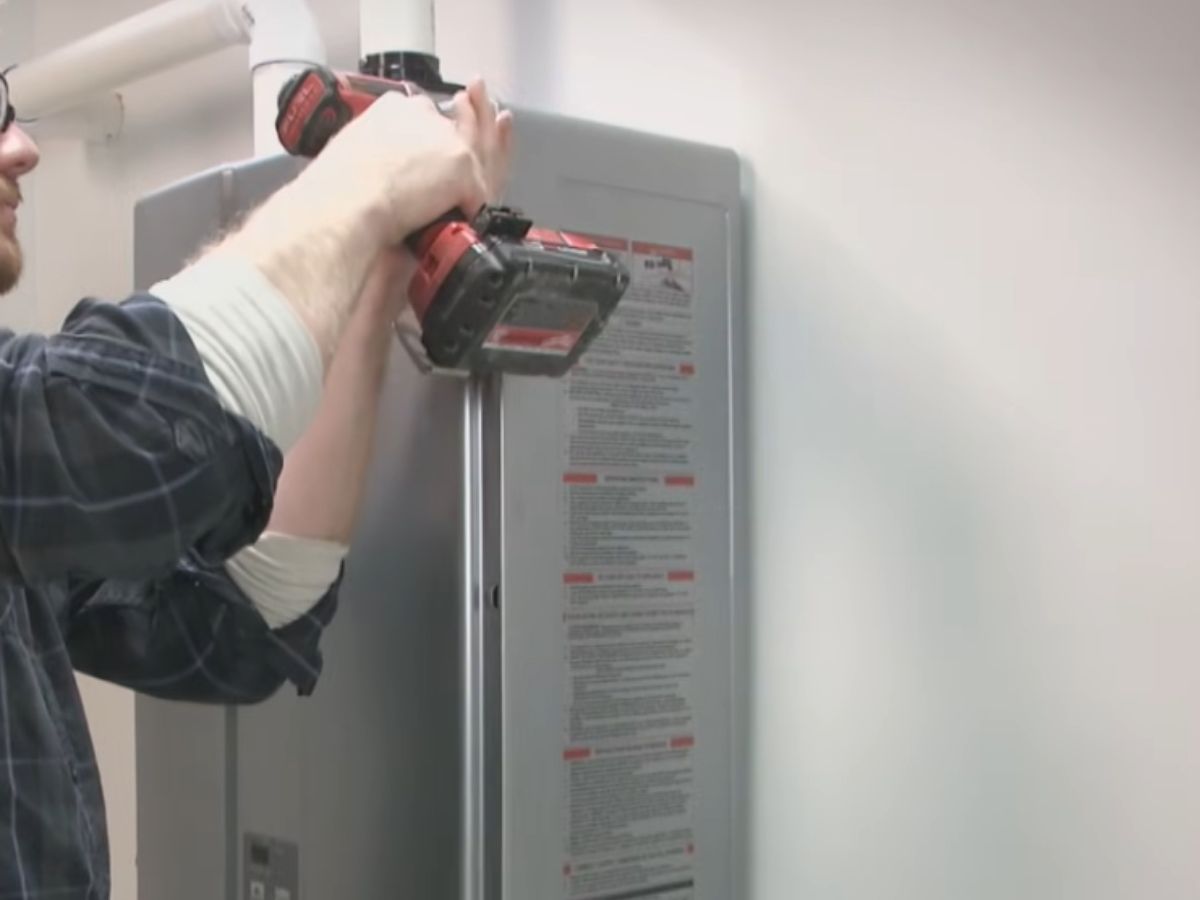
Tankless water heater service in Wilmington, NC covers the maintenance and troubleshooting a tank-style water heater doesn't need: descaling the heat exchanger, checking the venting, and diagnosing error codes on units with electronic controls. This is a different service from a straightforward water heater repair, since a tankless system's failure points are mostly about internal buildup and controls, not a single failed part.
Most calls come from one of two situations: a unit that used to deliver instant hot water and now takes longer or runs lukewarm, or a unit flashing an error code the homeowner doesn't recognize. Both usually trace back to scale buildup or a straightforward control issue rather than a failed unit.
Why tankless units need attention in this climate
Tankless heaters rely on a heat exchanger that scales up over time as minerals in the water supply pass through it. That scaling is what causes the gradual performance loss homeowners describe as "it's not as hot as it used to be." Manufacturers generally recommend a descaling flush on a fixed schedule. Skipping it is the single most common reason a tankless unit underperforms well before it should.
Coastal humidity also affects venting on gas tankless units, since a vent run exposed to constant moisture can develop condensation issues faster than the same run would inland. Most modern gas tankless units use electronic ignition and a control board, which means they typically need household power to operate even though they're gas-fired, worth knowing if a hurricane-season power outage is a real planning concern for your home.
Signs a tankless unit needs service
- Hot water takes noticeably longer to arrive than it used to.
- Water temperature fluctuates or runs lukewarm instead of consistently hot.
- An error code displayed on the unit's control panel.
- A rattling or popping sound during operation.
- The unit hasn't been flushed or descaled in the past year or two.
If you're asking why your "instant hot water" isn't instant anymore
Most homeowners don't call asking for a "descaling service" by name. They say the tankless unit that used to deliver hot water right away now takes a while, or it used to run one long, hot shower and now the temperature drifts. That's almost always the heat exchanger needing a flush, not a sign the unit is failing.
An error code is a similar story. Modern tankless units display a specific code for a specific condition, whether that's a venting issue, a flow sensor problem, or a control fault, and reading that code correctly is most of the diagnosis before we even open the unit.
What a tankless service visit includes
A standard flush circulates a descaling solution through the heat exchanger to dissolve mineral scale, typically taking 45 minutes to an hour depending on how long it's been since the last service.
We also inspect the venting for the condensation or blockage issues coastal humidity can cause, check the inlet water filter, which catches sediment before it reaches the heat exchanger, and read any stored error codes on the unit's control board.
If the issue turns out to be a failed component rather than scale buildup, a flow sensor or ignition control, for example, we'll quote that repair separately rather than bundle it into a standard service visit.
Want us to take a look? Call (919) 944-7281 and we'll walk through what you're seeing.
Service interval, by usage
| Household type | Recommended flush interval | Why. |
|---|---|---|
| Typical household, moderate hot water use | Annually | Standard manufacturer recommendation for most residential units. |
| Larger household, heavy hot water use | Every 6 to 9 months | Higher usage means faster mineral buildup in the heat exchanger. |
| Never serviced, 2+ years old | As soon as possible | Buildup compounds over time and a long-overdue flush often needs a longer service visit. |
What affects the price
- Whether this is a routine flush or a diagnosis of an error code or performance issue.
- How long it's been since the last service, which affects flush time.
- Whether a failed component needs replacing beyond a standard flush.
- Unit brand and model, since access and part availability vary.
Non-emergency estimates are free. For emergency work, we give you the real number before we start. Want yours? Call (919) 944-7281.
What we tell every tankless customer
We won't recommend replacing a tankless unit over a performance issue that a routine flush usually resolves. If the unit is simply overdue for service, that's the fix, not a new system.
If your unit is genuinely failing and a full water heater installation and replacement is the honest answer, we'll say so rather than keep billing for repeated service visits on a unit that's reached the end of its useful life.
Questions before you decide? Call (919) 944-7281, 24/7.
Tankless water heater questions from Wilmington homeowners
Most manufacturers recommend once a year for typical residential use, more often for larger households or if the unit has never been serviced.
It depends on the brand and code, but common causes include a venting issue, a flow sensor problem, or scale buildup restricting flow. We read the code as the first diagnostic step.
Usually not without power, since most modern gas tankless units use electronic ignition and controls that need household electricity to operate, even though the water is heated by gas.
Gradual performance loss is common and usually points to mineral scale in the heat exchanger, which a descaling flush typically resolves.
Yes. Call (919) 944-7281 with your unit's brand and model and we'll confirm what the visit involves.
Tankless unit not performing like it used to?
Call (919) 944-7281. We'll walk you through it.