Water Softener Installation & Repair in Wilmington, NC
Scale buildup on fixtures, a softener that stopped regenerating, or a system you're installing for the first time. We size, install, and repair water softeners for real Wilmington water conditions.
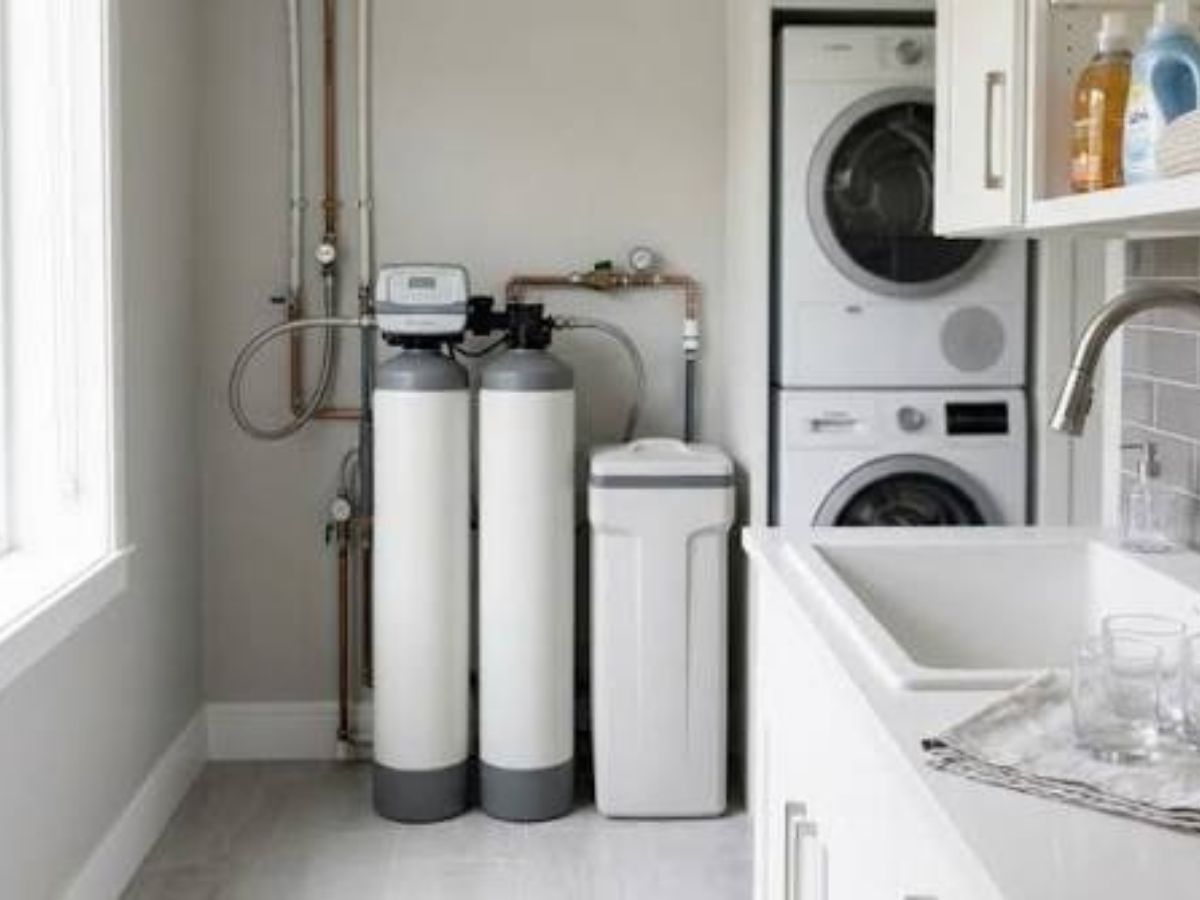
Water softener installation and repair in Wilmington, NC covers new system sizing and installation, troubleshooting a softener that's stopped regenerating on schedule, and repairing or replacing worn components like the resin tank, control valve, or brine tank.
Whether a softener is genuinely needed, and how it should be sized, depends on the specific water supply for a given address, since well water and municipal CFPUA water can differ meaningfully in mineral content. We test before recommending a system size rather than assume.
Why softener needs vary across New Hanover County
Homes on private wells, more common in parts of unincorporated New Hanover County outside CFPUA's service area, often deal with harder water and sometimes iron content that municipal customers don't see. That changes both whether a softener is worth installing and how it should be configured.
For homes on municipal CFPUA water within Wilmington itself, softening needs are usually about scale prevention and fixture longevity rather than a dramatic water-quality problem, a different conversation than the one we have with well-water customers.
Signs a softener needs service or installation
- Visible white or chalky scale buildup on faucets, showerheads, or glassware.
- Soap that doesn't lather well or leaves a filmy residue.
- A softener that's stopped regenerating on its normal schedule.
- Unusually high salt usage or a brine tank that isn't drawing down.
- Considering a softener for the first time due to fixture wear or appliance scale.
How we approach a softener job
For a new installation, we test the actual water supply for hardness and, on well systems, other minerals like iron, rather than size a system off a generic assumption. That test result determines the softener's capacity and regeneration settings.
For a system that's stopped regenerating, we check the control valve's timer or metered settings first, since a misconfigured schedule is a common and inexpensive fix compared to a resin bed problem.
If the resin bed itself is fouled or exhausted, which shows up as consistently hard water even right after a regeneration cycle, that's a resin replacement rather than a settings fix, and we'll say so plainly.
Want us to take a look? Call (919) 944-7281 and we'll walk through what you're seeing.
New installation vs. repair
| Situation | Usual call | Why. |
|---|---|---|
| No softener installed yet, hardness confirmed | New installation, sized to test results | A system sized off a real water test performs correctly from day one. |
| Softener not regenerating on schedule | Check and reset control valve settings | Often a settings issue, not a hardware failure. |
| Hard water persists even after regeneration | Resin bed inspection and likely replacement | Fouled or exhausted resin no longer removes minerals effectively. |
What affects the price
- Well water versus municipal CFPUA water, and the specific test results.
- New installation versus repair of an existing system.
- Whether the issue is a settings fix or a component replacement.
- System capacity needed for household size and water usage.
Non-emergency estimates are free. For emergency work, we give you the real number before we start. Want yours? Call (919) 944-7281.
What we tell every customer
We won't recommend a softener based on a guess about your water. We test first, and if the water genuinely isn't hard enough to need one, we'll say that too.
If your existing system just needs a settings adjustment, that's what we'll do, not a resin replacement you don't need yet.
Questions before you decide? Call (919) 944-7281, 24/7.
Water softener questions from Wilmington homeowners
It depends on your specific water hardness, which we test before recommending anything. Municipal CFPUA water is generally less mineral-heavy than many private wells, but scale prevention is still a common reason to install one.
It depends on your water hardness and household usage, but a sudden increase is worth checking, since it can indicate a valve or timer issue.
Typically every 10 to 15 years with normal use, sooner if the water has high iron content that fouls the resin faster.
Yes, water testing is the first step for any well-water customer considering a softener.
Yes. Call (919) 944-7281 with the brand and issue and we'll confirm what's needed.
Dealing with scale buildup or a softener acting up?
Call (919) 944-7281. We'll walk you through it.