PEX vs. Copper for Coastal NC Homes: What Salt Air Does to Pipes
Salt-laden coastal air doesn't just affect the outside of a house. It changes which pipe material actually makes sense for a Wilmington repipe.
By the Wilmington Express Plumbing team · Updated September 2026
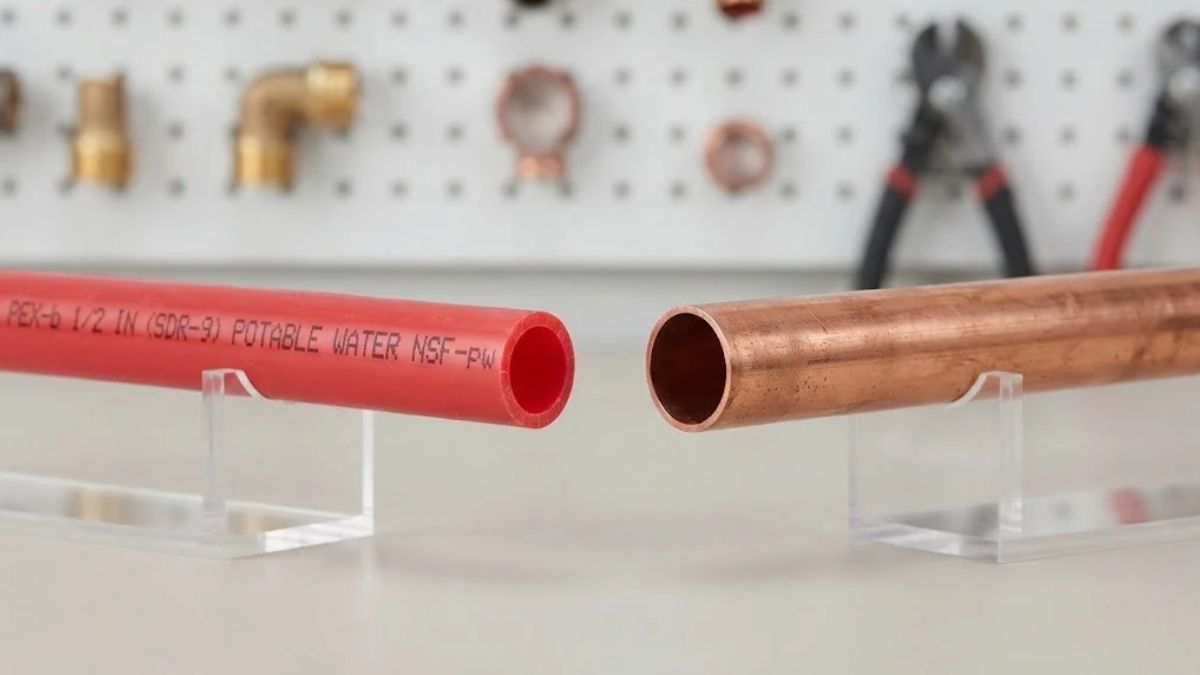
If you're facing a repipe decision in a Wilmington home, the material question comes up fast: PEX or copper? Inland, that's often a matter of preference and budget. Here, the area's humid, salt-laden coastal air genuinely changes the calculation.
Neither material is universally wrong. The honest answer depends on what's failing in your specific home and how it's failing.
Why copper struggles specifically in this climate
Copper is a proven, long-standing plumbing material, and it performs well in a lot of climates. The problem here is the combination of constant humidity and salt content in coastal air, which accelerates a corrosion pattern on copper that eventually pinholes the pipe from the inside out.
A copper line that would last several decades inland can show real wear here on a shorter timeline, particularly at joints and fittings exposed to humid crawl spaces or attics.
Why PEX has become the more common choice here
PEX resists the specific corrosion pattern that affects copper and aging galvanized lines in this climate. It's also more forgiving of the soil movement described in our piece on Wilmington's sandy soil and slab leaks, since it flexes slightly rather than cracking at a rigid joint.
That combination, corrosion resistance plus flexibility, is why PEX has become the default recommendation for most whole-home repiping jobs we do in this market, though it's not automatically right for every situation.
When copper still makes sense
Some homeowners specifically want to match existing copper runs, whether for consistency during a partial repipe or personal preference. Copper is a fine choice in that context. It's just worth understanding upfront that the same salt-air corrosion pattern affecting the original lines will eventually affect new copper too, on roughly the same multi-decade timeline.
For a partial repipe where only one section has failed and the rest tests sound, matching the existing material sometimes makes more practical sense than introducing a second pipe type into one system.
One material doesn't fit every part of a home
PEX isn't rated for exterior UV exposure, so any line running outside needs protection or a different material regardless of what's used inside the walls. This is a detail worth confirming with whoever is doing the work rather than assuming one material choice covers the entire property.
How to decide for your specific home
- Multiple recent leaks in different spots usually points toward a full repipe with PEX.
- A single isolated failure in an otherwise sound copper system often means a spot repair or partial match, not a full material switch.
- Homes built before the 1990s with original galvanized lines are strong candidates for a full PEX repipe given the material's age regardless of the corrosion question.
- Any exterior-run section needs UV protection or a different material, whichever pipe type is used inside.
What we actually see in the field here
In practice, most of the whole-home repipe jobs we do across Wilmington, from downtown to the newer subdivisions near Hampstead and Leland, end up using PEX. That's simply because most calls involve either aging galvanized lines from before the 1990s or a copper system already showing the coastal corrosion pattern in more than one spot.
The exceptions tend to be smaller, targeted jobs: a single copper line repair in an otherwise sound system, or a homeowner with a specific preference for keeping their existing material consistent throughout a partial project.
A cost consideration worth knowing upfront
PEX is generally the more budget-friendly material for a full repipe, both in material cost and in labor, since it's more flexible to route through existing walls than rigid copper. That's not the only factor in choosing a material, but it's a real, practical one worth knowing before you start comparing quotes.
Copper still has a place in specific situations, and a straightforward per-foot cost comparison misses the more important question: which material actually holds up in this specific coastal climate for the specific problem you're trying to solve.
The real question to ask before deciding
Rather than starting with a material preference, start with what your inspection actually shows: is this one isolated failure, or a pattern across multiple sections? That answer, more than any general PEX-versus-copper debate, is what should drive the decision for your specific home.
How the diagnostic step connects to the material decision
We don't recommend a material before confirming what's actually failing. That usually means a visual inspection of accessible sections, checking water pressure at multiple fixtures, and, where a leak has already occurred, understanding exactly where and why it happened.
A single pinhole leak in an otherwise sound copper system tells a very different story than three unrelated-seeming leaks over eighteen months. The first is often a spot repair. The second is a real signal that the material itself, not any one section, is reaching the end of its useful life in this climate.
What this means if you're renovating rather than repairing
If you're opening up walls for a kitchen or bathroom renovation anyway, that's often the most cost-effective time to address aging supply lines, even ones that haven't failed yet. Our Shower & Bathtub Installation page covers this same principle for bathroom-specific plumbing work: once a wall is open, updating what's behind it costs far less than opening the same wall again later for an emergency repair.
This is also a reasonable moment to ask about switching material entirely if you're only planning a partial project. Extending a small PEX run from a section already replaced is usually simpler than introducing PEX into an otherwise all-copper system for the first time during an unrelated renovation. Ask us during the initial estimate if that's a realistic option for your specific layout.
PEX and copper questions from Wilmington homeowners
Yes. PEX is certified for potable water use under the same plumbing codes copper is.
In this specific coastal climate, PEX often outlasts copper because it resists the salt-air corrosion pattern that eventually pinholes copper lines.
Yes, with the correct transition fittings. This is common in a partial repipe where only some sections are being replaced.
If the old lines had narrowed from internal corrosion, replacing them with full-diameter PEX typically does restore the original flow.
Weighing a repipe decision?
Call (919) 944-7281, 24/7.