Tankless Water Heaters in Humid Coastal Climates: Worth It in Wilmington?
A tankless water heater performs differently here than it would in a drier inland market. That doesn't make it a bad choice, but it does change what you should expect.
By the Wilmington Express Plumbing team · Updated September 2026
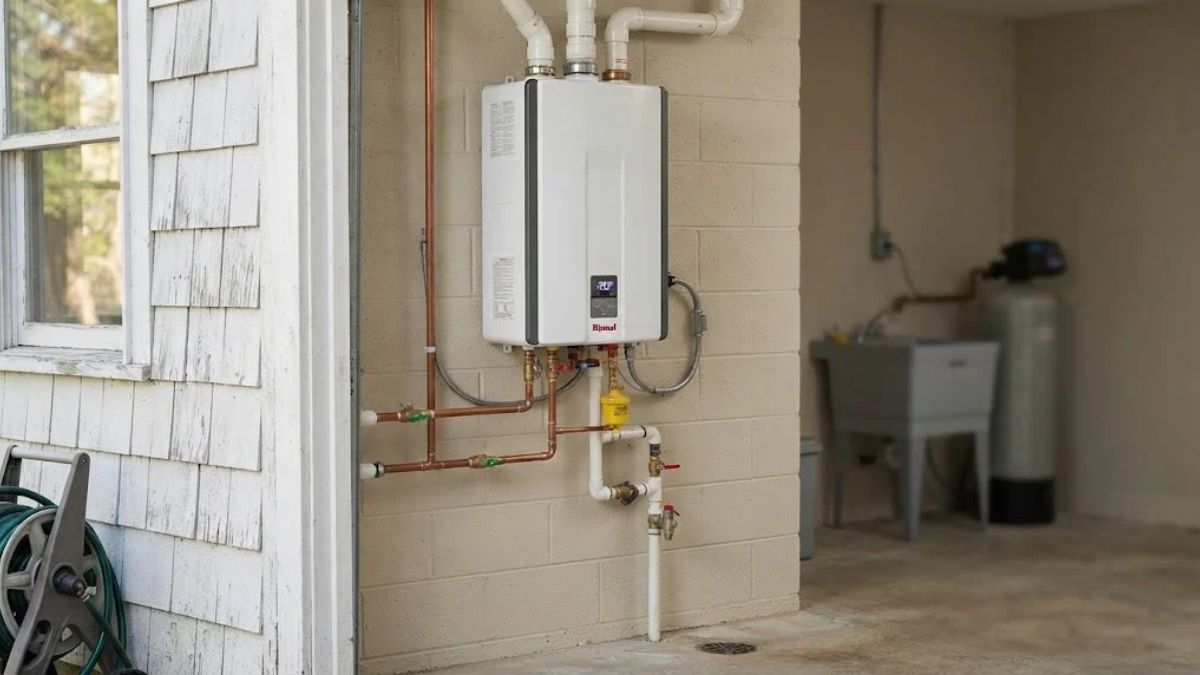
Tankless water heaters have real, genuine advantages: continuous hot water, a smaller footprint, and often a longer service life than a standard tank. Wilmington's humid subtropical climate doesn't cancel out those advantages, but it does introduce a few specific factors worth understanding before you decide.
Venting is the first real consideration
A gas tankless unit vents combustion byproducts outside, and constant coastal humidity can affect that venting over time, particularly condensation forming inside a vent run exposed to persistent moisture. This isn't a reason to avoid tankless, but it is a reason to make sure the installation accounts for the area's climate from the start rather than following a generic inland installation guide.
Mineral scale builds differently depending on your water source
A tankless unit's heat exchanger scales up over time as minerals in the water pass through it, which is true everywhere, not just here. What varies locally is the starting mineral content. A municipal CFPUA customer and a private well customer, covered in more detail on our well versus city water piece, may see different scaling rates depending on their specific water source.
Our Tankless Water Heater Service page covers the descaling flush that addresses this buildup, generally recommended annually for most households and more often for well customers with higher mineral content.
What hurricane season means for a tankless unit specifically
Most modern gas tankless units rely on electronic ignition and control boards, which means they typically need household electricity to operate even though the water itself is heated by gas. That's worth knowing if a power outage during hurricane season is a real planning concern, since a tankless unit won't necessarily keep working through an outage the way an older standing-pilot tank heater might.
If backup power is part of your hurricane preparedness plan, our Gas Line Installation & Repair page covers generator-related gas line sizing, worth discussing alongside any tankless installation if uninterrupted hot water matters to you during storm season.
So is it actually worth it here?
For most households, yes, with the right installation and a realistic maintenance plan. The continuous hot water and long-term durability advantages hold up in this climate the same way they do elsewhere. The difference is in the details: proper venting installation, an honest maintenance schedule based on your actual water source, and a clear understanding of how it behaves during a power outage.
Who might want to stick with a standard tank instead
- Households wanting the lowest possible upfront cost.
- Properties where a power outage without hot water is a dealbreaker and backup power isn't planned.
- Homes where the existing gas line or electrical panel would need a significant upgrade to support a tankless unit.
Making the decision with real information, not assumptions
The honest answer depends on your specific household's priorities and your home's existing infrastructure, not a blanket climate-based recommendation either way. We'll walk through your actual situation, including your water source and existing gas or electrical capacity, before recommending tankless over a standard tank or the other way around.
What installation actually looks like here
A proper tankless installation in this climate means routing the vent to minimize moisture exposure where possible. It also means using corrosion-resistant materials for any exposed fittings, and confirming the unit's location doesn't put sensitive electronic components in a consistently damp area without adequate protection.
None of this is exotic or especially expensive to account for. It does mean the installation should be planned with the local climate in mind from the start, rather than treated identically to an installation in a dry inland climate and adjusted only if a problem shows up later.
A real comparison: tankless versus tank in practice
A well-maintained tankless unit in this climate, properly installed and descaled on schedule, typically outlasts a standard tank by several years. It avoids the internal tank corrosion that eventually ends a standard unit's service life in Wilmington's humid, salt-laden air.
That advantage depends entirely on the maintenance actually happening. A neglected tankless unit that's never been descaled loses much of its performance advantage well before it fails outright, which is really a maintenance story more than a fundamental limitation of the technology itself.
What we tell customers considering the switch
If your current tank water heater is reaching the end of its service life anyway, that's a reasonable moment to seriously consider tankless, since you're already paying for a new unit and installation regardless. If your current tank is still performing well, there's less urgency to switch purely for the sake of upgrading.
A note on electric tankless units specifically
Electric tankless units sidestep the gas venting concern entirely, since there's no combustion byproduct to vent outside. They still need electricity to operate, so the hurricane-season power consideration applies the same way it does to a gas unit's electronic ignition and controls.
Electric tankless units typically require a significant electrical capacity upgrade in an older home, which is worth factoring into the cost comparison alongside the unit itself.
Tankless water heater questions for Wilmington homes
Not significantly on its own, as long as venting is installed correctly for the climate. The bigger factor is mineral scale buildup, which a regular descaling flush addresses.
Most modern gas tankless units need electricity for ignition and controls, so likely not without backup power, even though they're gas-fired.
Generally annually for municipal water customers, sometimes more often for well customers with higher mineral content. We can confirm the right interval based on your specific water.
It depends on your household's hot water needs and existing infrastructure more than the local climate specifically. We'll give you an honest comparison for your situation.
Weighing tankless versus a standard tank?
Call (919) 944-7281, 24/7.